 PawCompass 毛孩有方
Why Does My Dog or Cat Keep Scratching, Licking and Losing Hair? An Australian Skin-Allergy Guide
Last updated: 2026-09-07
On this page
- Why is my dog or cat constantly scratching, licking and losing hair?
- What does the itch pattern tell you in dogs versus cats?
- Could it be fleas or flea allergy dermatitis?
- Could it be an environmental (atopic) allergy?
- Could it be a food allergy?
- What else causes itching and hair loss besides allergies?
- How does a vet work out what is causing the itch?
- What are the treatment options for an itchy, allergic pet?
- When should you see a vet, and when is it an emergency?
- Where can you find related PawCompass resources?
- FAQ
Itch is a clinical sign, not a diagnosis. RSPCA, the University of Sydney Veterinary Hospital, the MSD Veterinary Manual and the ICADA canine atopic dermatitis consensus describe several overlapping directions behind scratching, licking, redness and hair loss; this guide helps you prepare for a veterinary assessment rather than label the cause yourself.
Why is my dog or cat constantly scratching, licking and losing hair?
Itching can sit alongside redness, scaling, skin thickening, pigment change, odour and hair loss, according to the MSD Veterinary Manual. Parasites—especially fleas—environmental or atopic allergy, food allergy, and problems that can mimic or overlap with allergy, including mites, fungi and secondary bacterial or yeast infection, all need veterinary consideration.
The MSD Veterinary Manual notes that inflamed skin can have more than one cause and that secondary bacterial and yeast infections commonly occur with skin inflammation. A veterinary diagnosis is therefore the useful next step when the pattern persists or worsens.
What does the itch pattern tell you in dogs versus cats?
The location, behaviour and seasonality of itch can point a veterinary conversation in a direction, but cannot diagnose it. The MSD Veterinary Manual describes the following sourced patterns for flea allergy, environmental or atopic allergy, and food allergy.
| Flea allergy | Environmental / atopic allergy | Food allergy | |
|---|---|---|---|
| Dog locations | Tail base, lower back, back and inner thighs | Paws, face, ears, front legs, belly | Similar to environmental allergy |
| Cat locations | Face, neck, back; may cause miliary dermatitis | — | Often head and neck |
| Seasonality | More common in summer; can be year-round in warm climates | Dogs are often seasonal but can be year-round; cats can be seasonal or nonseasonal | No marked seasonal variation in itch |
| Age at onset | Any | Dogs: 6 months–3 years; cats: usually under 5 years | — |
| Key action | Year-round flea control, environmental treatment, treat all household pets | Long-term multimodal management | Strict elimination diet trial |
| Relative frequency | One of the three itchiest skin diseases | About 10% of dogs; in cats less common than food allergy | Less common than environmental allergy in dogs; comparable in cats |
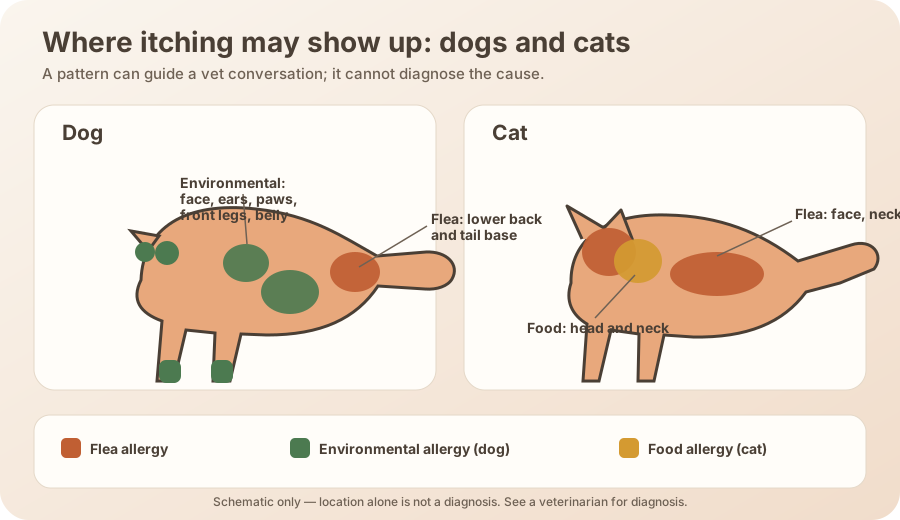
Schematic only, not a precise diagnostic tool; see a veterinarian for diagnosis.
Could it be fleas or flea allergy dermatitis?
Flea allergy dermatitis is a hypersensitivity reaction to flea saliva, and a small number of fleas can trigger marked itch even when you cannot see one. The University of Sydney Veterinary Hospital notes that some pets groom fleas away quickly; the MSD Veterinary Manual describes flea-allergy itch on a dog's lower back, tail base and thighs, and on a cat's face, neck and back.
Check for flea dirt with a fine-toothed comb: tap what you collect onto damp white paper, where flea dirt can turn red because it contains blood, as RSPCA explains. RSPCA also advises year-round flea treatment selected with a veterinarian, weekly vacuuming, hot washing bedding, treating outdoor kennels and treating every pet in the household; eggs, larvae and pupae can remain in the environment for weeks to months.
Never use a dog flea product on a cat. RSPCA and the University of Sydney Veterinary Hospital warn that dog flea products can be fatal to cats.
Could it be an environmental (atopic) allergy?
Atopic allergy is a lifelong, genetically predisposed condition that needs long-term management and regular veterinary review. The MSD Veterinary Manual says it commonly begins between 6 months and 3 years in dogs and usually before age 5 in cats.
In dogs, itch is the hallmark sign and is often seasonal, though it can be year-round; paws, face, ears, front legs and belly are common locations, and paw licking or face rubbing fits that pattern. The MSD Veterinary Manual estimates environmental skin allergy affects about 10% of dogs, and notes that recurrent ear infections can be the only sign in some dogs.
Cats can have seasonal or nonseasonal atopy, according to the MSD Veterinary Manual. Around 15% of atopic dogs and cats also have rhinitis and/or asthma, and no single test confirms atopy: vets use the pattern, history and exclusion of other causes, while allergy testing is used to select allergens for immunotherapy rather than diagnose the allergy.
Could it be a food allergy?
Food allergy is less common than environmental allergy in dogs, while the two occur at a comparable rate in cats and food allergy may be more common among cats with skin allergy. The MSD Veterinary Manual says food-allergy signs resemble environmental allergy, but itch has no clear seasonal variation and cats often show head-and-neck signs.
The only reliable diagnosis is a strict elimination or hydrolysed-protein diet trial, not a blood or skin test, according to the MSD Veterinary Manual. The trial diet must be complete and balanced and exclude every previously eaten ingredient—including treats, flavoured medicines, toothpaste and table food—for up to three months; cats may respond in 1–9 weeks.
What else causes itching and hair loss besides allergies?
Allergy is not the only explanation for an itchy, hair-losing pet: flea allergy, food allergy and sarcoptic mange are among the three itchiest skin diseases in the MSD Veterinary Manual. Mites, fungal skin disease and secondary bacterial or yeast infections can mimic or overlap with allergy, so a veterinarian may need skin scrapings, cytology or fungal culture to confirm the direction.
Itchy ears with head shaking and dark, crumbly discharge fit ear-mite signs described by the University of Sydney Veterinary Hospital, but ear infection, a foreign body, allergy and polyps can look similar. Ear mites spread readily between cats and can also spread to dogs, so ear abnormalities need veterinary examination rather than self-directed ear drops.
How does a vet work out what is causing the itch?
There is no one-step test for the cause of itch. The MSD Veterinary Manual describes a veterinary work-up as a combination of history and examination, flea and parasite control, skin scrapings, cytology, fungal culture and, when food allergy is a possibility, a strict elimination diet trial.
Atopy is diagnosed by excluding other causes using the pet's age, breed, signs, history and treatment response, according to the MSD Veterinary Manual. Allergy testing does not diagnose the allergy; it helps select allergens for immunotherapy after the clinical assessment.
What are the treatment options for an itchy, allergic pet?
Treatment usually combines supportive care with veterinary prescription treatment, because canine atopic dermatitis needs multiple interventions tailored to the individual dog. The ICADA canine consensus includes parasite control, avoiding triggers, gentle shampooing, coat care and essential fatty acids as supportive measures.
For dogs, ICADA lists topical or oral corticosteroids and oclacitinib, a JAK inhibitor, for acute flares; chronic options include corticosteroids, oral ciclosporin and oral oclacitinib. These are canine recommendations; the MSD Veterinary Manual notes that oclacitinib use in cats is off-label, so medicines and treatment plans should be discussed with a veterinarian.
Allergen-specific immunotherapy can improve but not cure atopy, and the MSD Veterinary Manual estimates it works for about 60% of dogs; it can take about a year to judge its effect. ICADA identifies allergen-specific immunotherapy with proactive intermittent topical corticosteroid use as the only intervention that may prevent or delay flares in dogs.
When should you see a vet, and when is it an emergency?
Go to the nearest emergency vet immediately if, within seconds to minutes of contact with a suspected allergen, your pet has breathing difficulty, collapse or weakness, pale gums, or sudden vomiting or diarrhoea. The MSD Veterinary Manual calls suspected anaphylaxis an extreme emergency; cats can have severe respiratory distress and dogs commonly have gastrointestinal signs.
Arrange prompt veterinary care for sudden swelling of the face, eyes, lips, muzzle or mouth, or widespread hives while breathing remains normal. The MSD Veterinary Manual says hives are usually not life-threatening and often settle, but any breathing change means immediate emergency care; veterinarians commonly use antihistamines for hives.
Persistent or worsening itch, ooze, odour, spreading crusts, thickened or darkening skin, and ear discharge or smell all warrant veterinary assessment. These signs are described by the MSD Veterinary Manual and the University of Sydney Veterinary Hospital as skin inflammation, chronic change, or ear abnormalities that can need investigation.
Where can you find related PawCompass resources?
These three PawCompass resources can help you record skin and coat changes, use the itch-direction tool, and find veterinary care. This page is the 10-section overview; deeper guides for individual causes will be added over time.
This guide provides general information about possible causes and veterinary care; it cannot replace veterinary diagnosis or treatment. Persistent or worsening itch, skin infection and ear problems need a veterinary examination. If, after contact with a suspected allergen, your pet has breathing difficulty, collapse, pale gums or sudden vomiting or diarrhoea, go to the nearest emergency vet immediately; sudden facial or eye swelling or widespread hives need prompt care, and any breathing change means immediate emergency care. Discuss medicine and flea-product choices with a veterinarian based on your pet's species, weight and health—dog flea products can be fatal to cats (RSPCA).
FAQ
My dog or cat keeps licking their paws. Is it an allergy?›
In dogs, paw licking fits a common atopic-allergy location. In either dogs or cats, a vet needs to distinguish allergy from causes such as secondary infection.
Can I rule out flea allergy if I cannot see fleas?›
No. Some pets groom fleas away quickly, and a small number of fleas can trigger marked itch with flea allergy. Try the flea-dirt test and keep year-round flea prevention current.
Will changing food brands cure a skin allergy?›
Food allergy is the only situation where diet may be the trigger, and a casual food swap cannot replace a strict elimination or hydrolysed-protein diet trial. A formal trial can run for up to three months and excludes old ingredients.
Can I give my pet a human allergy medicine for itch?›
Allergic skin disease often needs more than one treatment, so discuss medicines and the treatment plan with a veterinarian first.
Can skin allergy be cured?›
Reliable flea control can remove the trigger for flea allergy. Environmental or atopic allergy is managed for life; immunotherapy can improve it but does not cure it, while food allergy relies on strict avoidance of the trigger food.