Bringing a Kitten Home in Australia: First-Day and First-Week Checklist
PawCompass AU · Last updated: 15 Nov 2026
On this page
- Before pickup: the essentials checklist
- Set up a quiet starter room
- The first day: let your kitten come to you
- The first week: follow confidence, not a rigid timetable
- Introducing children, dogs and resident cats
- Food, litter and play: the daily basics
- Feeding: keep it familiar at first
- Litter: make it accessible, never punish
- Play and handling: choice builds confidence
- Four Australia-specific jobs for new kitten owners
- When not to “wait and see”
- The takeaway
- Sources and editorial scope (checked 15 November 2026)
- FAQ
Editorial note: Publication of this original PawCompass guide has been authorised by the content owner. It draws on public information from RSPCA Australia, the Australian Veterinary Association (AVA), Cats Protection and the NSW Government. Not reviewed by a veterinarian. General welfare education only; not a diagnosis or treatment plan. The original topic video was not assessed and is not cited as evidence for its specific claims.
You do not need to buy every kitten accessory on day one. The priorities are simpler: a safe and quiet starter room, complete kitten food, fresh water, a reachable litter tray, places to hide, and a plan to speak with a vet. Some kittens investigate quickly; others hide until they feel secure. Let your kitten set the pace.
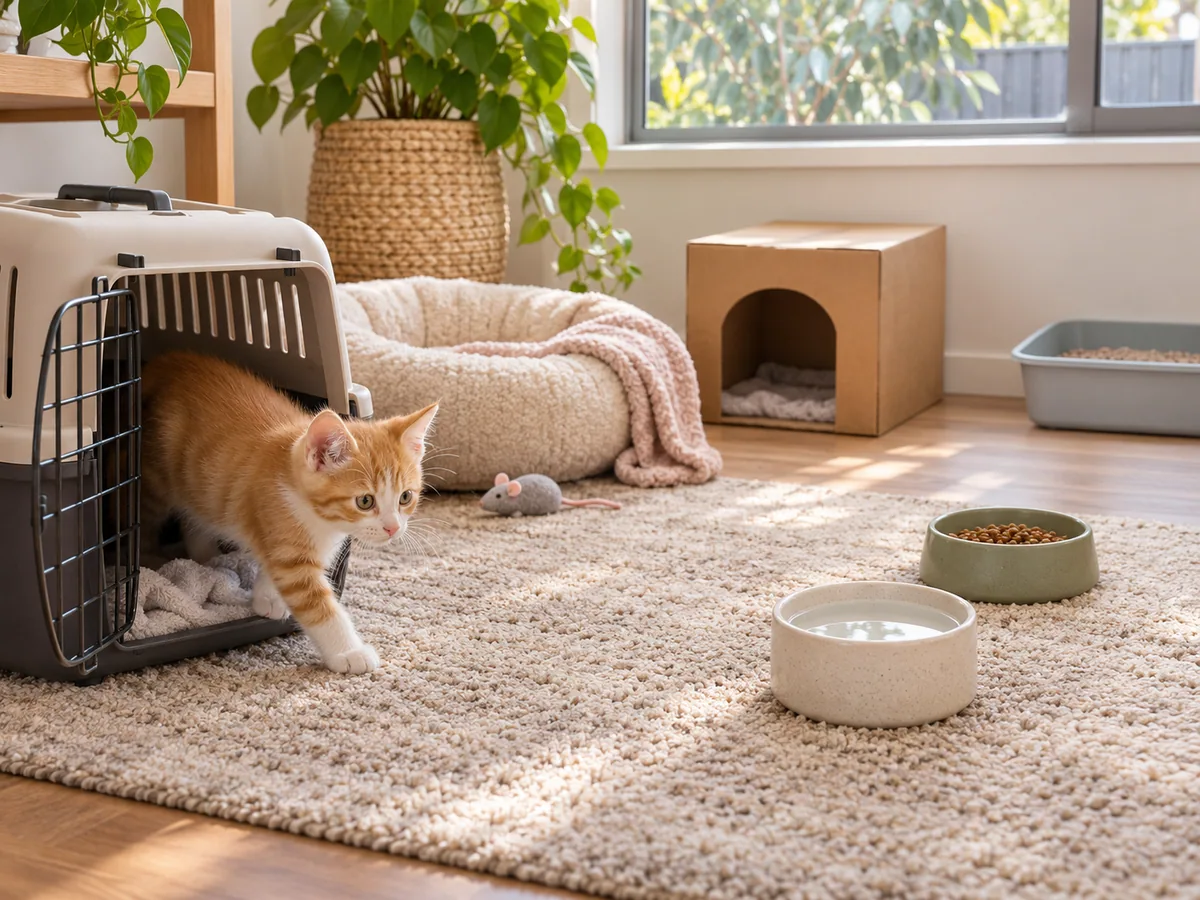
Original AI-generated illustration. The decorative plants shown must not be assumed cat-safe; check every household plant before bringing a kitten home.
Before pickup: the essentials checklist
| Priority | What to prepare | Practical note |
|---|---|---|
| Essential | Secure, ventilated cat carrier | For transport and vet visits; line it with familiar bedding |
| Essential | Complete, age-appropriate kitten food | Ask the current carer what they have been feeding; change foods gradually |
| Essential | Food bowl and fresh water | Keep feeding, drinking and toileting areas separate |
| Essential | Easy-entry litter tray and scoop | Start with familiar litter when possible; choose a quiet, accessible position |
| Essential | Comfortable bedding and hiding spots | A stable cat bed and cardboard boxes offer valuable choices |
| Useful | Scratching post, stable scratcher and wand toy | Support natural behaviour; put wand toys away after playing |
| Useful | Safe elevated places | Check stability and prevent access to dangerous gaps or drops |
| Plan ahead | Initial vet visit and records check | Bring vaccination, parasite-prevention and microchip information |
RSPCA Australia recommends giving cats several choices of key resources in separate places, not crowding every item into one corner. If space allows, plan for two litter trays in different positions; ensure at least one is always easy to reach while your kitten is in their starter room. See our cat litter tray setup guide.
Set up a quiet starter room
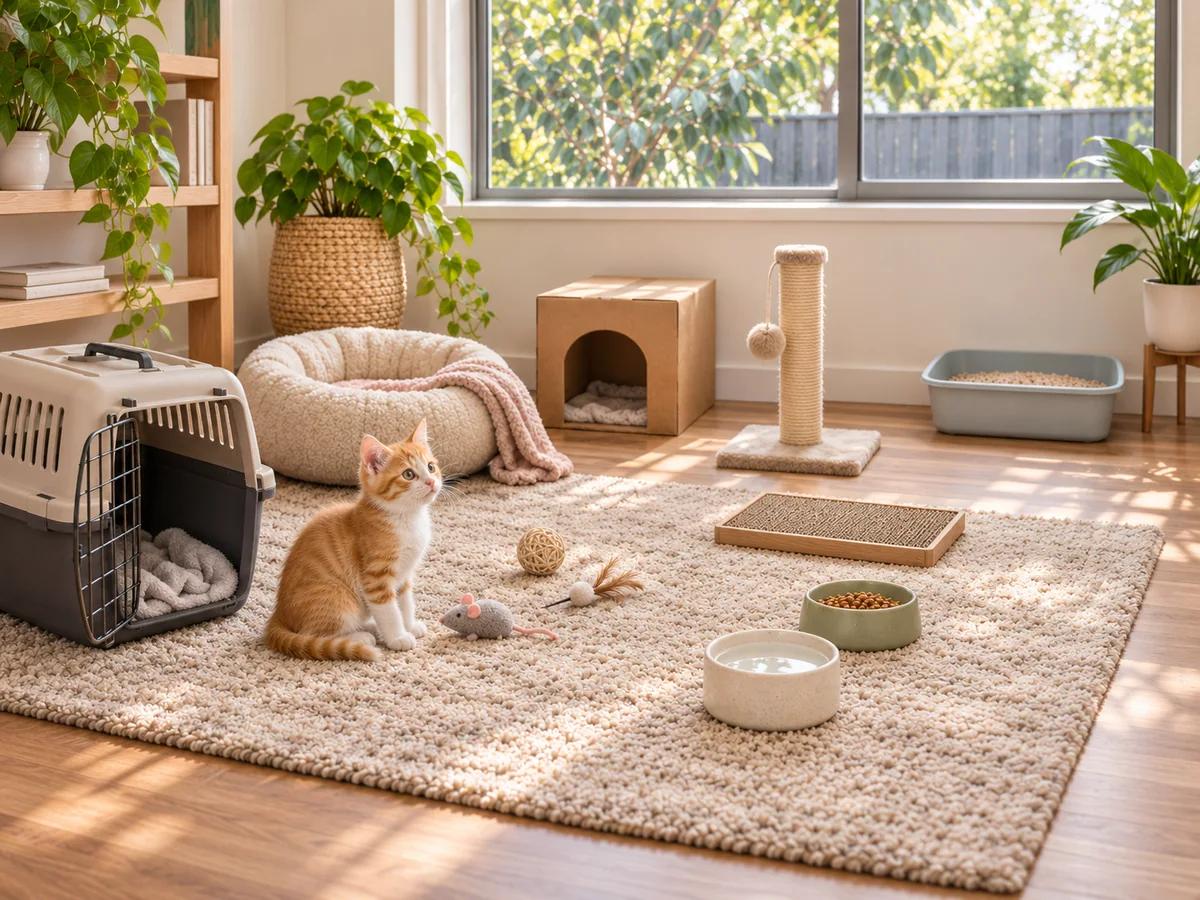
Illustrative setup: separate litter from food and water. Check the safety of all decorative plants before use.
Choose a calm, well-ventilated room where you can close the door and block escape routes. It does not need to be large, but it should offer distinct places to eat, drink, toilet, rest and play.
- Separate food, water and litter. A quiet feeding area, a separate water bowl and a litter tray away from both help your kitten choose what they need.
- Provide more than one hiding or resting place. A cardboard box, comfortable bed and safe, low perch give them options.
- Include familiar smells. Ask the shelter or current carer whether a blanket with the kitten's scent can travel with them.
- Kitten-proof the room. Secure windows and balconies, tie away cords, check gaps behind appliances, and remove medicines, cleaning products, hair ties, threads and other swallowable items.
- Watch out for plants. True lilies and daylilies can cause life-threatening poisoning in cats. Even pollen or vase water can be hazardous. If exposure is suspected, seek emergency veterinary advice immediately rather than waiting for symptoms. See RSPCA Australia's lily warning.
The first day: let your kitten come to you
- Travel in a secured carrier. Do not allow your kitten to roam loose inside the car.
- Go straight to the starter room. Close the room door, open the carrier and allow your kitten to exit when ready. Never shake or pull them out.
- Show them the basics gently. If they are exploring, point out the litter tray, water and resting places without repeatedly moving or grabbing them.
- Avoid sudden changes. Keep their familiar food and litter initially where possible. Save introductions to guests and major household changes for later.
- Respond to their body language. Offer brief play or gentle contact when they approach; stop if they hide, retreat or seem overwhelmed.
If you have young children, agree on three simple rules: no chasing, no forced cuddles and no disturbing the kitten when sleeping or toileting.
The first week: follow confidence, not a rigid timetable
| When | What to watch | What you can do |
|---|---|---|
| First hours | Can your kitten find water, litter and somewhere secure to hide? | Keep the room quiet and note their known food and toileting activity |
| Following days | Are they beginning to eat, use the litter tray and investigate willingly? | Maintain predictable routines and offer short, positive play |
| As confidence grows | Are they relaxed in the starter room and recovering well from new sounds? | Open one additional safe space at a time, with a clear route back |
| Throughout the week | Energy, appetite, urination, bowel movements and any worrying changes | Organise health records, speak with a vet and check microchip details |
This is not a seven-day deadline. A shy kitten may need longer. If your kitten remains highly distressed or shows signs of illness, ask a veterinarian for advice rather than forcing the next stage.
Introducing children, dogs and resident cats
Do not put a new kitten straight into a room with resident pets. Start with a separate space and essential resources, then consider carefully paced scent exchange, safe barriers and brief supervised introductions only once everyone is coping. Stop if encounters trigger fear, chasing or conflict. See RSPCA Australia's guidance on introducing a new cat.
Food, litter and play: the daily basics
Feeding: keep it familiar at first
Use complete, balanced kitten food designed for growth and offer clean water at all times. Cow's milk is not a substitute for water and can cause digestive upset. Avoid feeding a kitten a meat-only homemade diet or adult dog food without veterinary advice. Adjust feeding frequency and portions to the kitten's age, weight, product guidance and a vet's recommendations.
Unweaned, weak or sick kittens need specialist feeding advice, not an ordinary first-week checklist. Read more in our kitten feeding basics.
Litter: make it accessible, never punish
A litter tray should be easy to enter, in a quiet position and away from food and drinking water. Start with familiar litter if possible and keep the tray clean. If your kitten has an accident, do not punish them; check the tray setup, stressors and possible health issues. Straining repeatedly with little or no urine, obvious pain or severe lethargy needs urgent veterinary attention. Our litter tray guide covers practical setup.
Play and handling: choice builds confidence
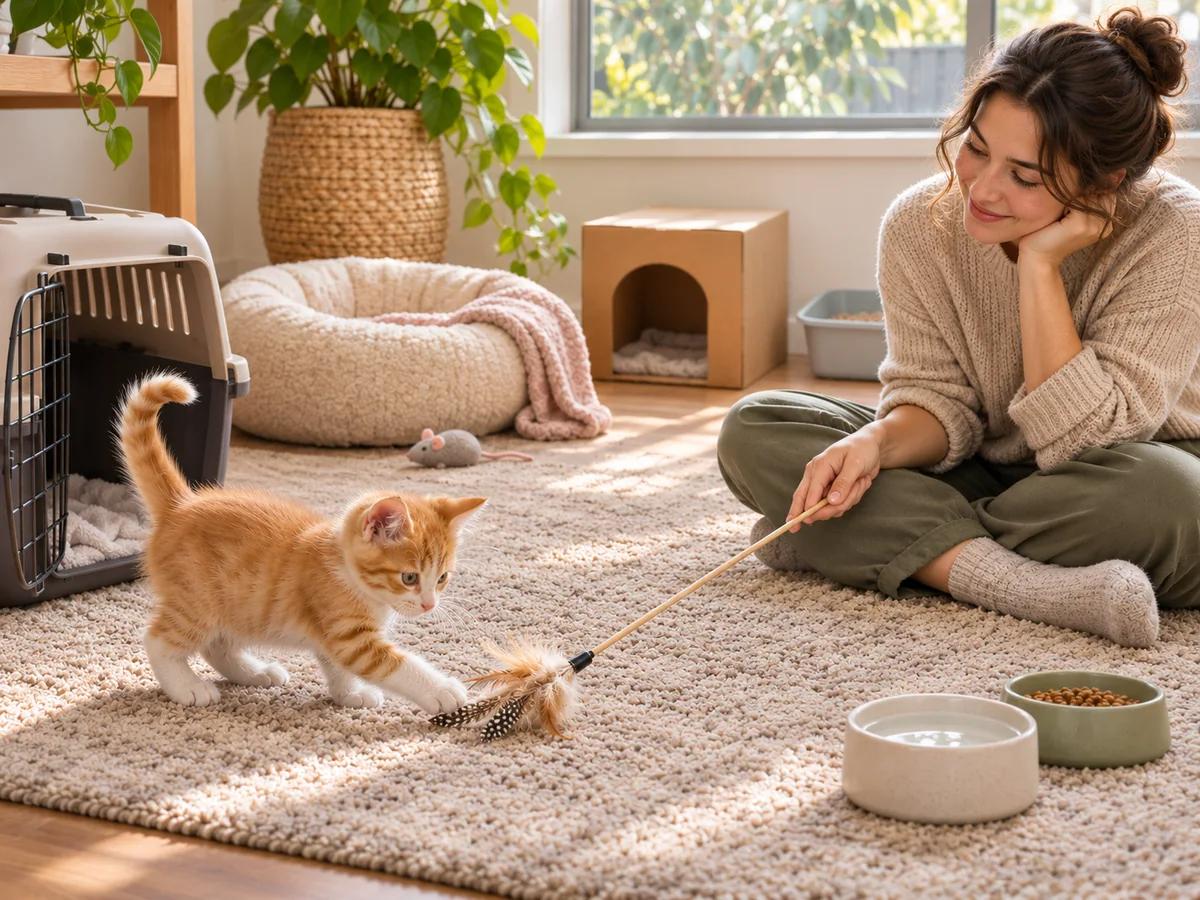
Gentle play should give a kitten the choice to engage or retreat; never force contact.
Offer short play sessions with safe toys; do not encourage biting hands or feet. The AVA recommends positive, gradual socialisation that gives kittens a way to withdraw. Socialisation is not a race to expose them to everything before a certain age. See the Australian Veterinary Association's kitten socialisation policy.
Four Australia-specific jobs for new kitten owners
- Arrange an initial veterinary check. Bring adoption or breeder paperwork, known vaccination records and parasite-prevention information. Ask the vet about your kitten's individual health needs, vaccination planning and desexing.
- Check microchip information. Confirm the number and check the recorded owner's contact details.
- If you live in NSW, check registration and transfer. Current Service NSW guidance requires cats and dogs to be microchipped and registered according to the applicable 12-week-of-age or ownership-transfer rule. The person selling or transferring the pet has responsibilities for microchipping before handover. Laws vary across other states and territories.
- Plan for ongoing care. Identify a local veterinary clinic and after-hours service and consider how you will cover routine or unexpected expenses. The PawCompass kitten planner can help you organise reminders, but it cannot replace professional care.
When not to “wait and see”
It is common for a new arrival to be cautious or hide, but illness should not be dismissed as settling-in nerves. Contact a veterinarian promptly if your kitten appears weak, persistently vomits or has diarrhoea, struggles to breathe or urinate, is injured, or may have encountered a toxic substance. Severe symptoms or suspected lily exposure warrant emergency veterinary advice. Very young kittens can deteriorate quickly and deserve earlier assessment.
If your kitten is simply shy but continues to eat, drink and toilet normally, reduce disturbance and give them time. If you are unsure whether behaviour is typical for your kitten's age and health, contact a vet rather than following a generic “wait 24 hours” rule.
The takeaway
A successful first week is about safety, predictable resources, gentle choices and timely veterinary care, not having a kitten cuddle you on night one. Respect their pace, gradually build trust and address health concerns early.
Sources and editorial scope (checked 15 November 2026)
- RSPCA Australia — How should I look after my new kitten? — Australian kitten care, nutrition, resource layout and welfare.
- Cats Protection — Bringing a new kitten home — carrier safety, starter room, household hazards and settling; UK welfare guidance, not Australian law.
- Australian Veterinary Association — Puppy and kitten socialisation and habituation — positive, choice-based socialisation principles.
- RSPCA Australia — Are lilies toxic to cats? — lily toxicity and urgent veterinary response.
- Service NSW — Register your dog or cat in NSW — NSW microchipping, ownership transfer and registration; check current rules before relying on legal details.
- RSPCA Australia — Introducing a new cat or kitten to an existing cat — separate resources and gradual introductions.
Rights and verification: This is independently written, with links to source guidance rather than copied source text, images or videos. The existence of relevant guidance does not verify the statements made in any original Cats Protection video. Before publication, PawCompass must complete its T05 editorial checks, any necessary professional review and permissions verification.
FAQ
Is it normal for a new kitten to hide after coming home?›
Hiding can be a normal response to an unfamiliar environment. Provide a quiet room and let the kitten emerge voluntarily. If they also seem unwell, weak, stop eating, vomit or struggle to urinate, contact a veterinarian promptly.
Does my new kitten need cow's milk?›
No. A weaned kitten needs complete kitten food and clean drinking water. Cow's milk is unnecessary and may upset their stomach. An unweaned kitten needs age-specific advice from a veterinarian or recognised rescue organisation.
When can I let my kitten explore the entire home?›
There is no fixed day. Once your kitten is eating, using the litter tray and confidently exploring their starter room, introduce other safe spaces gradually and let them retreat whenever they wish.
Do I need to register an adopted kitten in Australia?›
Rules vary by state and territory. In NSW, check the microchip number, ownership transfer and NSW Pet Registry requirements. Follow current Service NSW instructions for registration and timing.