 PawCompass 毛孩有方
New Dog Owner Checklist: What to Buy, What to Skip, What Not to Get Wrong
Last updated: 2026-08-14
On this page
New dog owners tend to fall into one of two traps: buying everything that looks cute and ending up with a pile of unused gear, or trying to save on everything and accidentally cutting corners on the things that actually matter — like vaccinations and parasite prevention — which ends up costing more down the track.
This guide splits things into what you actually need, where you can genuinely save, and the mistakes that trip up most first-time owners. If you want the full annual cost breakdown first, see The Real Cost of Owning a Pet in Australia.
What to have ready before pickup
Based on guidance from RSPCA, Pet Circle's vet team and local Australian vet clinics, here's what to sort out before your dog comes home:
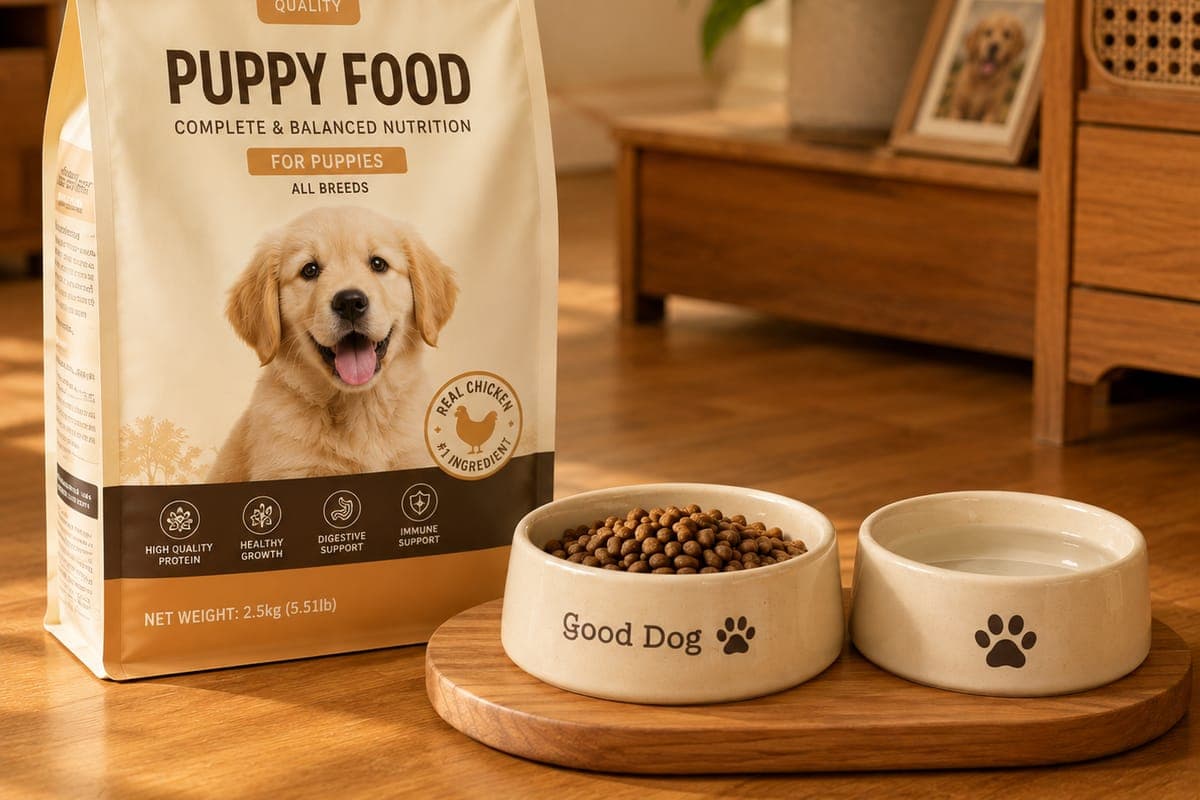
Food and water
- A quality puppy-appropriate food (ideally matching what the breeder or shelter was already using, to avoid tummy upsets from an abrupt diet change)
- Small training treats
- Food and water bowls
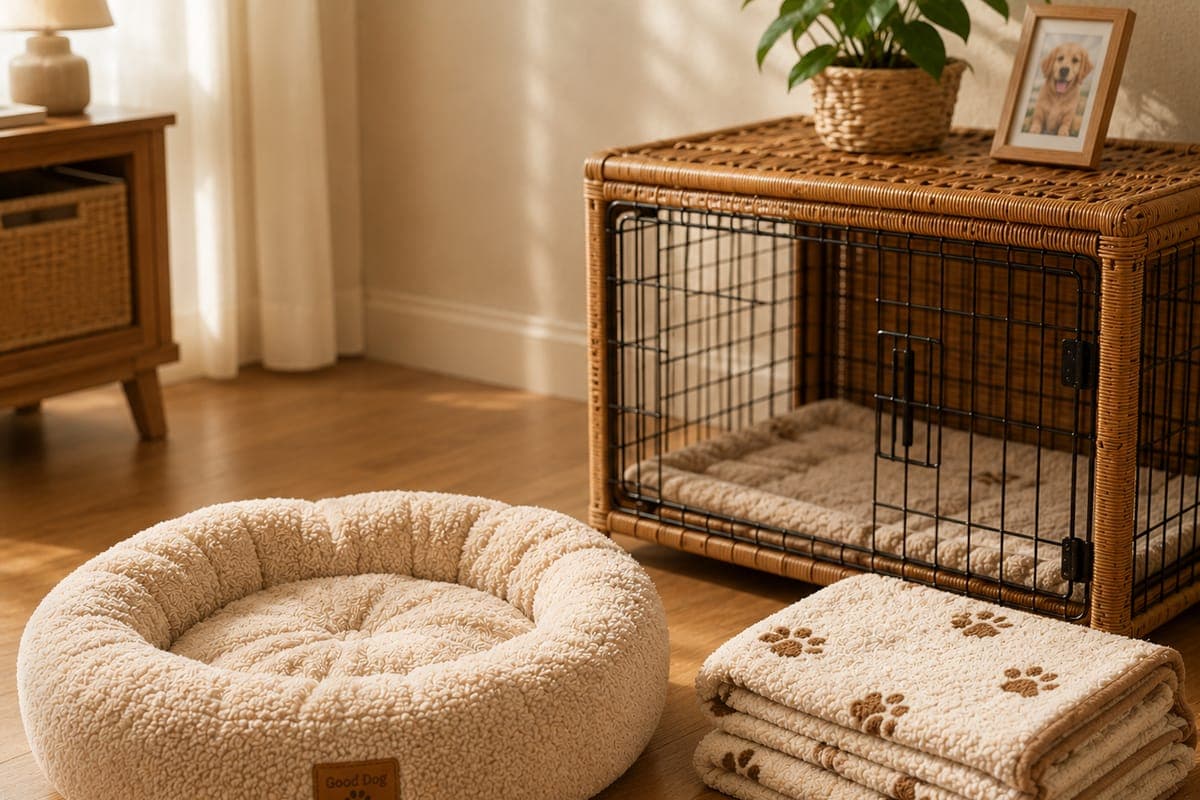
Sleeping and rest
- A comfortable bed or blankets
- A crate or playpen (gives them a safe, bounded space while they settle in)
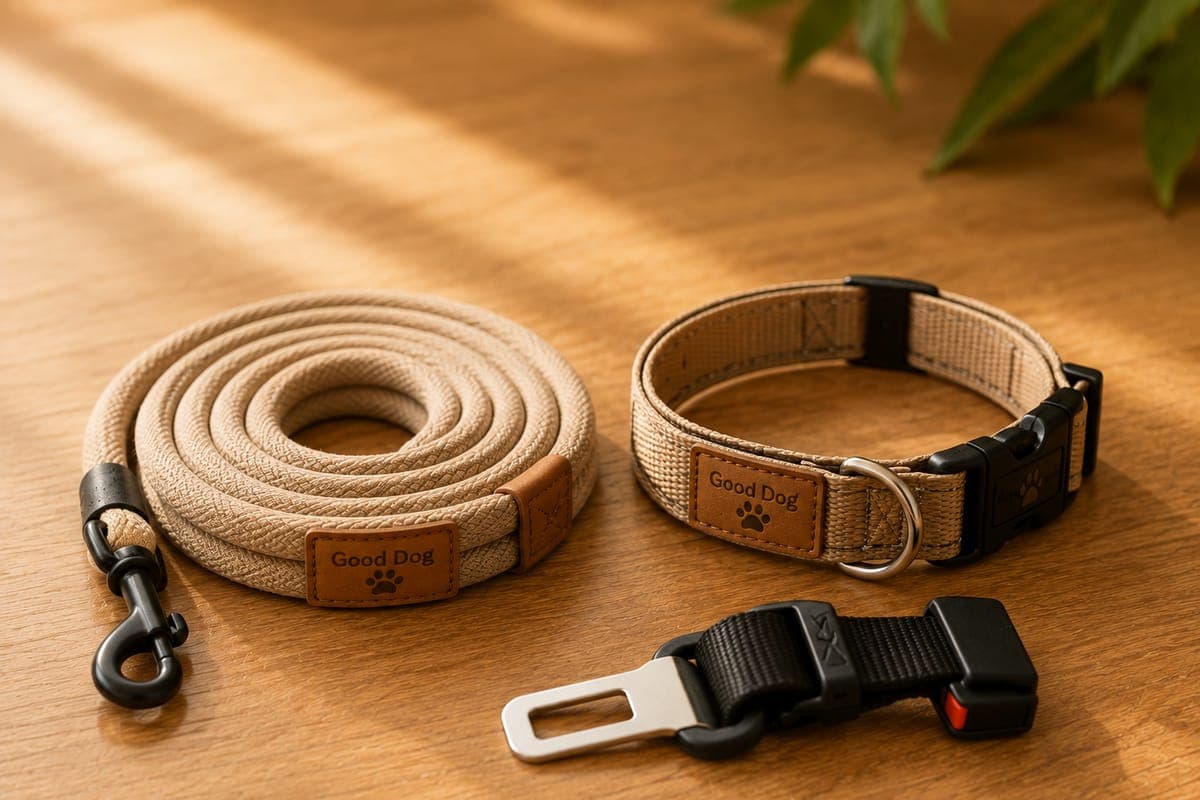
Getting around safely
- Collar and lead (a cheap one to start — puppies outgrow gear fast)
- A car restraint or travel crate
- Toys (avoid ones stuffed with fluff that can be chewed apart and swallowed)
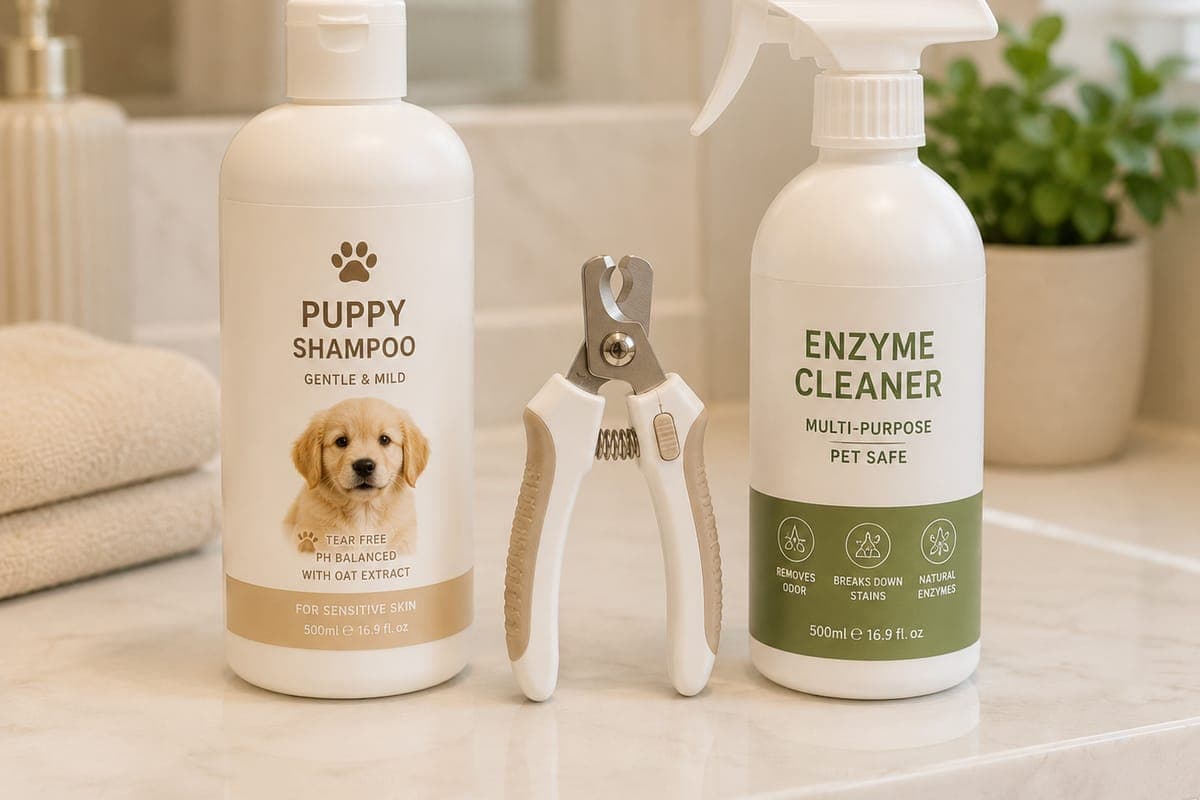
Grooming and cleanup
- Gentle puppy shampoo
- Nail clippers
- Enzymatic cleaner (specifically for toilet-training accidents — it breaks down scent markers better than regular cleaners, which helps stop repeat accidents in the same spot)
Health protection
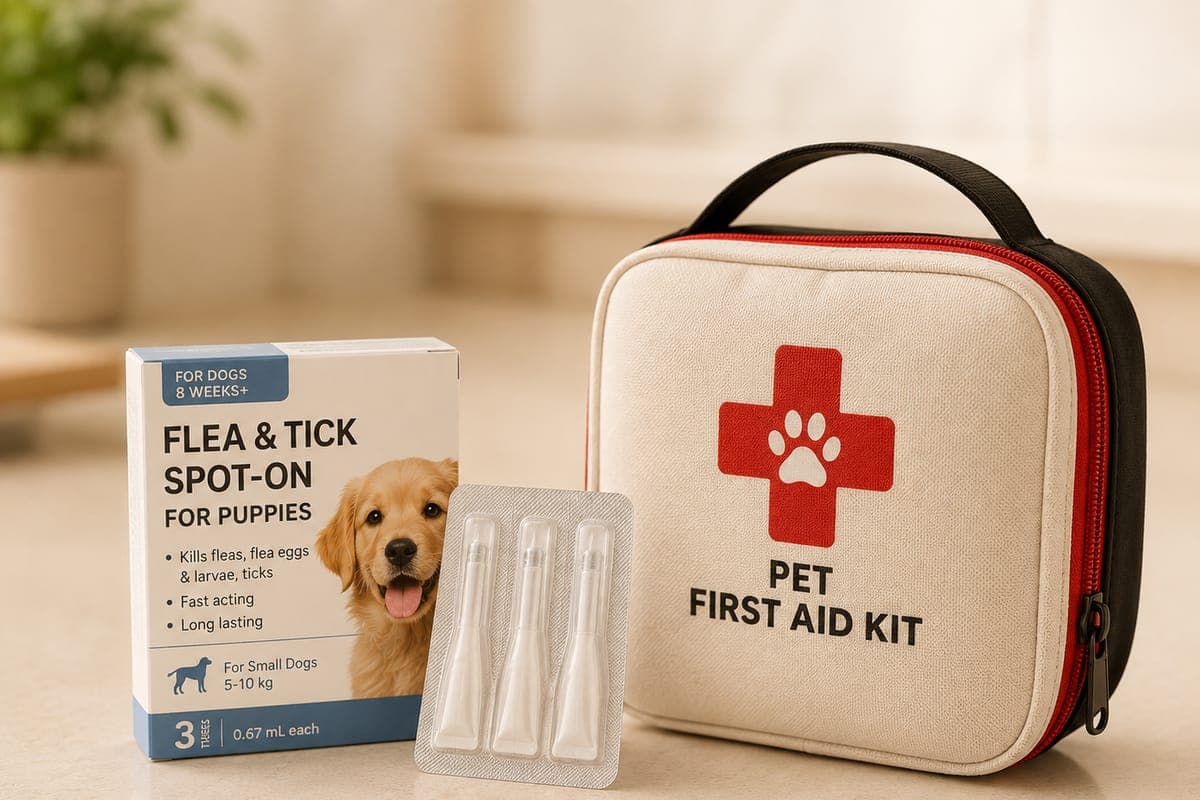
- Flea, tick and worming treatment (ask your vet which product suits your pup)
Three things to book in early, Australia-specific
These aren't optional purchases — they're the timeline Australian regulations and vets recommend, and knowing it ahead of time saves a lot of back-and-forth:
- Microchipping and council registration: most states require microchipping before a puppy is sold or given away. Council registration is a separate step and doesn't happen automatically once they're chipped. Registering a desexed pet is usually significantly cheaper — an easy saving many new owners miss. Check the specifics on our state-by-state registration guide.
- Vaccinations: typically three rounds, around 6-8 weeks, 12 weeks and 16 weeks. Wait about two weeks after the final shot before visiting dog parks or beaches. Incomplete vaccination need not mean total isolation; see our puppy socialisation guide for lower-risk options and ask your own vet first.
- Worming and desexing: intestinal worming every two weeks until 12 weeks old, then monthly. Heartworm prevention should start by 12 weeks at the latest. Desexing is usually done around 6 months, though for large breeds over 20kg, waiting until 12 months can be better for bone development — talk to your vet about the timing trade-off.
Where you can genuinely save
Saving money doesn't mean buying the cheapest option for everything — it means spending where it counts:
- Consider adopting instead of buying: as covered in the FAQ, RSPCA adoption fees usually already include desexing, vaccinations, microchipping and worming — saving several hundred dollars in the first year alone.
- Stick to dry food and buy in bulk: RSPCA vets note most pets don't actually need wet food — quality dry kibble is enough, and being non-perishable it's cheaper to buy in larger quantities. If budget is tight, mixing a little wet food into dry kibble improves palatability without blowing the food budget.
- Check secondhand marketplaces for bigger items: Moneysmart specifically recommends checking online marketplaces for things like beds and crates. Plenty of new owners buy a bed their dog turns out not to like — secondhand listings are full of barely-used gear.
- DIY what you can: bathing your dog and trimming nails yourself, and learning basic training commands from free online resources, saves real money on grooming and training classes. Your dog won't mind if the haircut isn't salon-perfect.
- Prevention beats treatment, every time: staying on top of vaccinations, worming and a healthy weight looks like an ongoing cost, but it's what keeps you out of the far more expensive emergency vet visit later. Check whether your local council or animal welfare group runs low-cost vaccination or desexing clinics — many do.
- Buy insurance early: see the FAQ above — buying after a diagnosis is effectively buying nothing for that condition. Before choosing, use the Australian pet insurance comparison to check waiting periods, pre-existing-condition rules and limits.
The mistakes that trip up most first-time owners
Drawing on patterns Australian vet clinics report seeing repeatedly:
- Delaying the first vet visit: book a check-up within 48 hours of bringing your dog home. It catches early issues and gets your vaccination schedule locked in.
- Going out and about before vaccinations are finished: as above, wait two weeks after the final shot.
- Getting feeding wrong: common mistakes include feeding adult food to a puppy, not measuring portions against the packaging guide, and regular table scraps. Getting this wrong early sets up obesity and joint problems down the line.
- Assuming vaccinated means parasite-covered: vaccination and parasite prevention are two separate things — worming needs to continue on schedule regardless of vaccination status.
- Inconsistent rules across the household: if one person allows the dog on the couch and another doesn't, it creates confusion and makes behavioural issues more likely to stick around. Agree on the rules, then use the 8–24 week puppy training schedule to put skills in a sensible order.
- Ignoring dental care: many owners only think about teeth once bad breath is obvious. Starting brushing and dental chews early makes it much easier for your dog to accept, and avoids expensive dental work later.
- Missing the 3-14 week socialisation window: this is the period that shapes lifelong temperament and social confidence. Safe, controlled exposure to new people, sounds and environments during this window meaningfully reduces fear and aggression issues later.
- Waiting to see if it gets better: lethargy, refusing food for over 24 hours, vomiting or diarrhoea lasting more than a day, or suspected ingestion of something dangerous — don't wait these out. You can check specific foods with our can they eat that tool, but if symptoms have already started, contact your vet directly.
The bottom line
You don't need to spend big on the most expensive gear on day one, and you shouldn't cut corners on the things that actually protect your dog's health. Put the budget where it matters most — vaccinations, parasite prevention, desexing, insurance — and get creative on the flexible stuff like beds, toys and grooming. That's how you spend well without cutting the wrong corners.
FAQ
Does adopting instead of buying from a breeder actually save money?›
Yes, and the gap is meaningful. RSPCA NSW figures put desexing, vaccinations, microchipping and flea/worm treatment at roughly $890-$1,150 combined in the first year if arranged separately through a breeder. When you adopt from RSPCA, these are usually already done before adoption and bundled into the adoption fee — ask exactly what's included before you commit.
Can I take my puppy out or to a dog park before they've finished their vaccinations?›
It's not recommended. Australian vets generally advise avoiding dog parks, beaches and other spaces with unknown dogs until two weeks after the final vaccination (usually around 16 weeks), due to the risk of diseases like parvovirus. You can still socialise safely at home or in your yard during this window — carrying your pup around to meet new people, sounds and environments works just as well for the critical 3-14 week socialisation period.
Should I buy pet insurance right away, or wait until my dog actually gets sick?›
Buy it early. Almost all pet insurance excludes pre-existing conditions — anything diagnosed or showing symptoms before the policy starts won't be covered. Waiting until your dog is unwell to get insurance usually means that exact condition can never be claimed. Buying while they're healthy is how you lock in the cover.