 PawCompass 毛孩有方
Puppy Training Schedule: A Week-by-Week Plan from 8 to 24 Weeks
Last updated: 2026-08-14
On this page
- What training success means
- The first week at home / about 8–9 weeks
- About 9–10 weeks: foundations in daily life
- About 10–12 weeks: a little real-life difficulty
- About 12–16 weeks: generalise without piling on pressure
- About 16–24 weeks: consolidate, generalise and prepare for adolescence
- A daily rhythm without mandatory quotas
- When to increase difficulty
- Real case: Biscuit's progress was not linear
- Common sticking points and useful adjustments
- A final note: training and socialisation belong together
- FAQ
A week-by-week schedule can create the wrong impression: that every puppy should submit the same homework by the same birthday. The useful part of an 8–24 week plan is its sequence. Real progress means willing participation, growing reliability across settings and a family that knows how to prevent avoidable mistakes.
What training success means
A behaviour performed in a quiet kitchen is not automatically available on the street. Success combines three things: the puppy understands and wants to play the training game; skills are gradually generalised to new places and distractions; and caregivers use gates, leads, distance and storage to prevent unsafe behaviour being rehearsed.
Sleep, toileting, health and emotional state come before the lesson plan. More repetitions will not fix an overtired puppy, a full bladder or pain. Agree on markers, cues and household rules before expecting consistency from the dog.
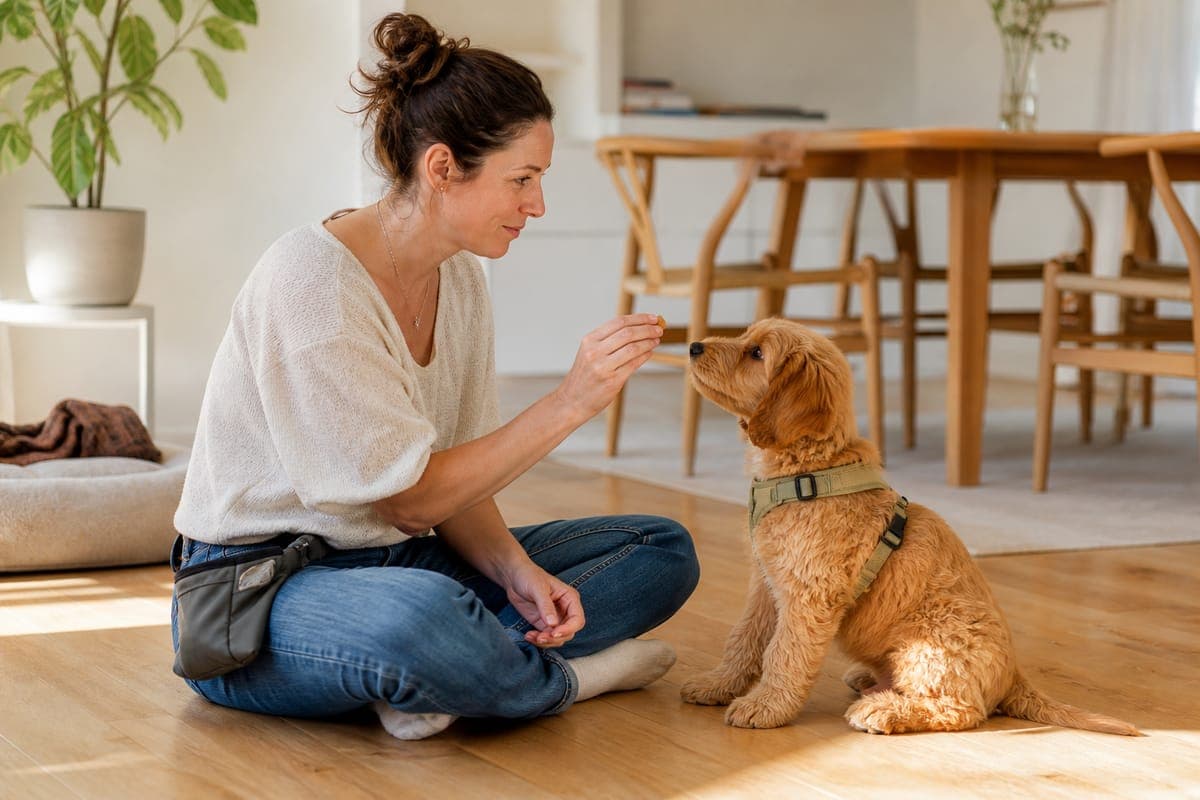
The first week at home / about 8–9 weeks
The first week is about predictability, not the number of cues learned:
- create a pen or puppy-safe room and offer toilet trips after waking, eating and play;
- say the name once, mark the turn towards you and reward, rather than repeating the name as background noise;
- introduce a brief marker word or click that identifies the successful moment;
- reward voluntary check-ins, approaches and calm four-paws-on-the-floor choices;
- place food in the crate or pen to build voluntary entry, never using the safe area as punishment;
- begin easy separations measured in seconds and return while the puppy is calm;
- play short recalls between two people indoors, reward arrival, then release back to play;
- briefly touch an ear or paw or present the harness, reward and allow movement away.
Good management reduces opportunities to toilet on carpet, chew electrical cords or leap from calm to panic when left. It is not failed training; it creates room for the right behaviour to be practised. For first-week toilet frequency, location choices and accident clean-up, follow the puppy toilet training guide.
About 9–10 weeks: foundations in daily life
Add following, positive associations with a harness and lead, swapping objects, mat settling and a brief pause before food. When puppy teeth find hands or ankles, first check for tiredness, toileting needs and excessive stimulation. Offer an appropriate toy and briefly pause interaction instead of holding the mouth shut or shouting.
Teach “drop” by exchanging the object for something worthwhile. Return safe items at times so human approach predicts good news rather than a chase or forced loss. Begin mat work by rewarding the puppy for choosing to step on it, then gradually reinforce staying, sitting or lying down—never by physically holding them there.
About 10–12 weeks: a little real-life difficulty
Within the risk limits agreed with your vet, a clean, controlled reward-based puppy class may be appropriate. At home, introduce a few steps of loose-lead movement, doorway pauses, recall around mild distraction, gradually longer easy separations and cooperative grooming or body checks.
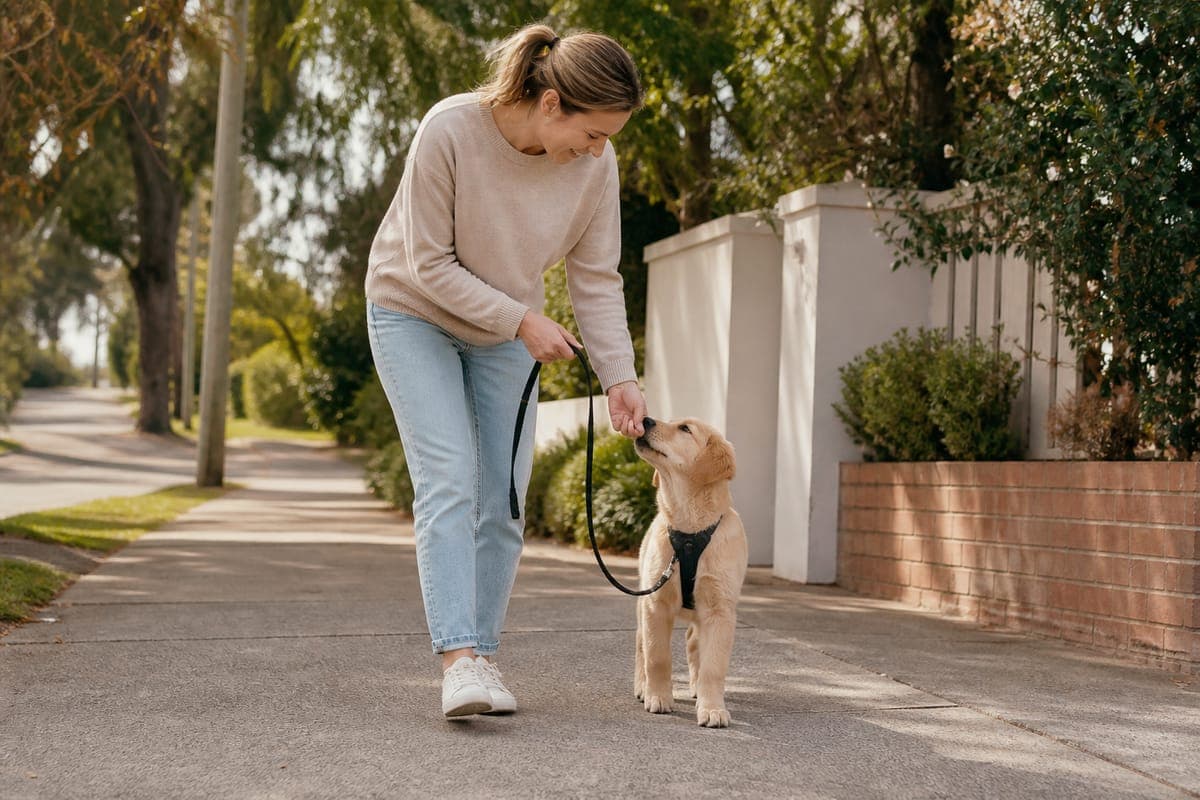
Loose-lead walking does not require a puppy to remain glued to your leg. Begin indoors or on a private driveway, rewarding proximity while the lead hangs visibly slack. If it tightens, stop or simplify instead of jerking it. Recall should not always end the fun, or “come” will quickly predict loss of freedom.
About 12–16 weeks: generalise without piling on pressure
Take name response, recall, loose-lead movement, drop, leave-it and mat settling into different rooms, the garden and new places your vet considers safe. Change only one criterion at a time: duration, distance, distraction or complexity. When moving recall to the front entrance, shorten the distance rather than adding dogs, traffic and a longer wait together.
Dog parks offer little control over distance, health status or interaction style and are poor classrooms for unfinished skills. For vaccination, puppy-class and exposure decisions, read Puppy Socialisation in Australia and follow your own vet's advice.
About 16–24 weeks: consolidate, generalise and prepare for adolescence
The 16–24 week band is for consolidation and generalisation; it is not the equally urgent core socialisation window. Keep reinforcing recall, loose leads, self-control, alone time and settling while carefully varying place and distraction. Teething, growing stamina and increasing independence may make a puppy appear to have forgotten familiar lessons.
Returning to the easy version will usually help more than becoming louder or punitive. The long-term goal is not permanent perfection. It is a household that notices excessive difficulty, manages it promptly and rebuilds reliability.
A daily rhythm without mandatory quotas
Attach micro-sessions to things that already happen:
- before opening the morning door, reward one check-in or brief pause;
- use a few breakfast pieces for name response, following or crate entry;
- during play, practise one exchange and return the safe toy;
- after toileting, walk a few loose-lead steps or observe outside sounds from indoors;
- while the household eats or works, reward calm choices on the mat;
- before bed, try one brief care interaction or an easy indoor recall.
This is an example sequence, not a compulsory daily checklist. When biting, frantic movement or loss of focus increases, consider rest, toileting and lower stimulation first.
When to increase difficulty
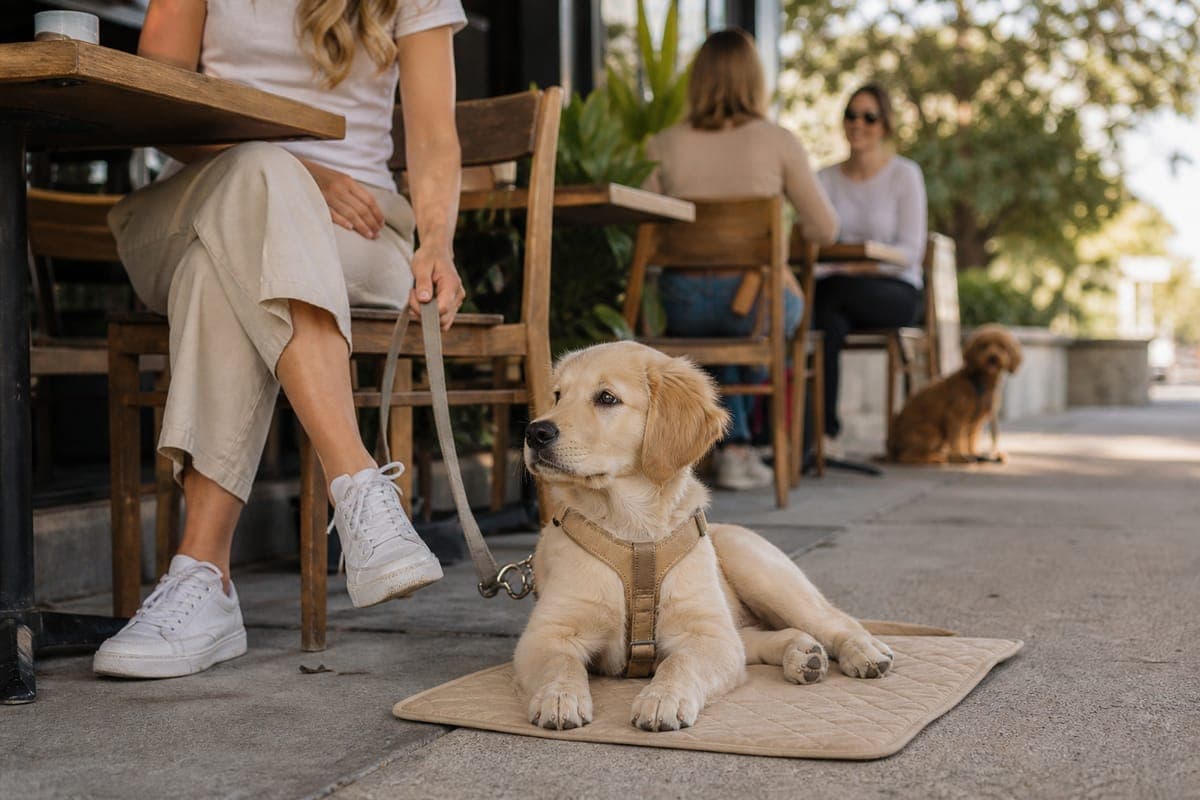
Raise one criterion slightly when the puppy has succeeded easily several times, has relaxed body language, can take the available reward in that setting and chooses to participate again. If the same step fails twice in a row, use that as a practical cue to reduce distance, duration, distraction or complexity—or to rest.
Two misses are not a diagnosis and do not prove stubbornness. They are a simple early-warning rule for novice trainers. Build success again before progressing, and assume that moving to a new place will temporarily lower reliability.
Real case: Biscuit's progress was not linear
In Zak George's How to Train the FIRST 5 THINGS to ANY Puppy!, rescue puppy Biscuit works on attention, sit and leave-it while public sounds and calm choices are broken into rewardable moments. The later video, The Final Test, shows improved confidence around dogs while resource guarding remains an acknowledged concern.
That unfinished result is the useful lesson: progress in one skill does not resolve every risk. Resource guarding can involve conflict and bites, so families should not copy a filmed test by grabbing an object; assessment belongs with a vet and qualified behaviour professional. The series includes sponsorship and creator narration. PawCompass treats it as an observable case, not scientific evidence for the sponsor, channel claims or a guaranteed result.
Common sticking points and useful adjustments
- Different cues from each person: agree on words and household rules first.
- The reward has little value: change food, play or environment, and check whether fear is blocking participation.
- Sessions run too long: finish during the puppy's best work, not after disengagement.
- It only works in the kitchen: lower criteria in each new place and generalise gradually.
- Several variables changed at once: adjust only duration, distance, distraction or complexity.
- Warnings are punished: stop creating conflict and seek help; silencing growls does not change the underlying emotion.
- Adolescent regression feels like total failure: restore management, simplify and reinforce again.
A final note: training and socialisation belong together
Training supplies communication and exit skills; socialisation shapes how a puppy feels about the world. Both should reward willing participation, allow rest and avoid forced completion. For safe experiences before full vaccination, the traffic-light model and puppy-class decisions, return to Puppy Socialisation in Australia.
This article provides general education. Persistent fear, aggression, resource guarding, separation panic, bite risk or a sudden behaviour change should be discussed with a registered vet and referred to a qualified professional when needed.
FAQ
At what age can puppy training begin?›
Most puppies can begin name response, toilet routines and brief reward-based learning when they arrive home, commonly at about 8 weeks. Sleep, health and safety come first; each age band is a typical starting point, not a weekly graduation deadline.
How long should one puppy training session be?›
There is no universal number of minutes. Fit practice around meals, outings and play, and finish while the puppy is still focused and willing. A few clear successes are usually more useful than one drawn-out session.
What should I teach my puppy first?›
Begin with a reward marker, name response, voluntary attention, a toilet routine, a safe area and indoor recall. Then add swapping objects, settling, loose-lead skills and gradual alone time. Safety and communication matter more than tricks.
Is it normal for puppy training to go backwards?›
A harder environment, tiredness, teething and adolescent change can all cause temporary regression. Return to an easier setting, lower one criterion and reinforce again. Ask a vet about any sudden or marked behaviour change.
When does resource guarding or biting need professional help?›
If a puppy stiffens, growls, snaps or creates bite risk around food or objects, or the problem is worsening, do not grab items or punish warnings. Contact a registered vet, then a qualified reward-based trainer or veterinary behaviour professional as appropriate.