 PawCompass 毛孩有方
Paralysis Tick Protection in Australia (2026)
Last updated: 2026-08-30
On this page
- Where in Australia is paralysis tick risk highest?
- When should you be on guard for paralysis ticks?
- How should you check your pet for ticks every day?
- How do paralysis tick symptoms progress?
- What should you do if you find a paralysis tick?
- How can you prevent paralysis ticks?
- Where can you find related paralysis tick information?
- FAQ
The Australian paralysis tick (Ixodes holocyclus) is small, but its toxin can cause progressively worsening neurological and breathing signs in dogs and cats. Risk is not spread evenly across Australia. It is concentrated in humid environments along the eastern coast, so households in Sydney, southeast Queensland and other coastal areas need to make year-round prevention and hands-on checks routine rather than seasonal.
This guide brings together information from the Australian Museum, the Animal Poisons Helpline and a peer-reviewed study of the tick’s east-coast distribution. It is general information, not a veterinary diagnosis. Ask your own vet to select prevention for your pet’s species, weight, age and health. If you find a tick or see any of the signs below, contact a vet immediately.
Where in Australia is paralysis tick risk highest?
Paralysis tick risk is concentrated in the humid coastal regions of eastern Australia, particularly wet sclerophyll forest and temperate rainforest, according to the Australian Museum. Peer-reviewed occurrence records place the traditionally recognised range in a narrow pattern along the east coast, from northern Queensland to East Gippsland in Victoria, with most records near the coast. This is an ecological belt shaped by moisture, vegetation, wildlife hosts and local weather, not an administrative boundary with a fixed width.
From north to south, the corridor to keep in mind includes southeast Queensland, Brisbane and the Gold Coast, the Northern Rivers, Coffs Harbour, Port Macquarie, Newcastle, Sydney, Illawarra/Wollongong, the NSW South Coast and the eastern Victorian coast. In Sydney, risk is not limited to homes that sit inside forest. Suburbs near bushland, national parks, coastal scrub, vegetated creek corridors and areas with frequent wildlife movement may all put pets closer to tick habitat.
Dry inland areas and cities such as Adelaide and Perth sit outside the traditional I. holocyclus east-coast range and are relatively lower risk. “Relatively lower” does not mean “impossible”. Ticks can travel on pets, clothing and camping equipment. A pet returning from an endemic area still needs a check based on where it has been, not just the postcode where it lives. The map below is a broad guide only; it cannot tell you whether a particular street, garden or park is safe.
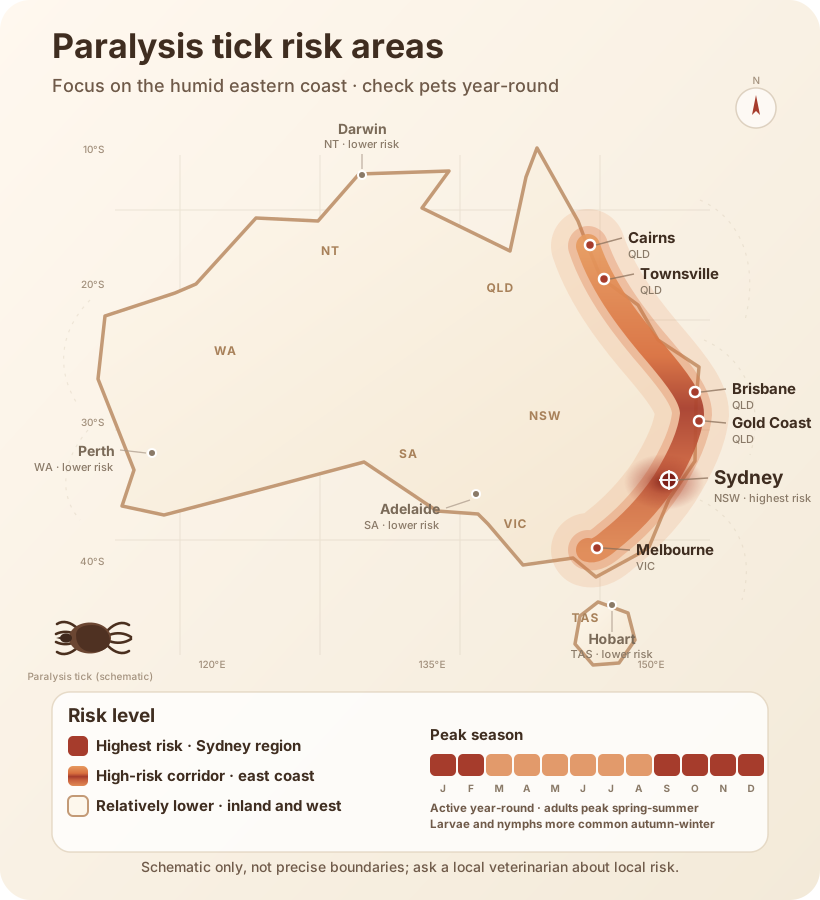
Schematic only, not precise boundaries; ask a local veterinarian about local risk.
When should you be on guard for paralysis ticks?
Paralysis ticks may be found all year round, according to the Australian Museum. Larvae are found mostly in autumn and winter, while adults are most common from spring to midsummer. As different life stages take their turn, the end of the main adult peak does not mean that ticks have disappeared from the environment.
For households in NSW and Sydney, a simple reminder cycle can help: review prevention and check routines in August and September, maintain the highest level of awareness from September through December, and stay alert through the warm, humid months that follow. This is a memory aid, not a reason to start, pause or stretch a medicine interval. Products have different schedules and modes of action, so follow your vet’s instructions and the current label throughout the year.
Southeast Queensland is particularly unsuited to the idea of a reliable winter off-season. The peer-reviewed distribution study notes that I. holocyclus is active throughout the year and that peak activity among its life stages overlaps. Suitability along this eastern coastal belt is driven mainly by rainfall and humidity rather than dropping to zero on a set calendar date. Seasonality is more marked farther south in Victoria, but a pet that has entered east-coast habitat still needs checking. The practical conclusion is straightforward: continue prevention and physical checks year-round.
How should you check your pet for ticks every day?
A tick hidden under fur may be easier to feel than to see, so begin near the nose and move slowly through the body in sections with your fingertips close to the skin. Have your pet stand or lie on its side. Feel with the coat, then gently work against it where needed to expose the skin. An engorged tick can feel like a new small bean or firm lump. When you find a bump, do not immediately pick at it with a fingernail. Part the coat in good light and confirm whether it is a tick, scab, nipple or skin lump.
Using the same order every day makes missed areas less likely:
- Top of the head, cheeks, muzzle and nose area
- Ear flaps, the entrance to each ear and behind the ears
- Around the eyes, lips, chin and gum line
- Neck, front of the chest and beneath the collar or harness
- Both armpits and the inside of the front legs
- Abdomen, between the back legs and the groin
- Paw pads, between every toe and around the nails
- Base and underside of the tail and the hindquarters
The Animal Poisons Helpline draws particular attention to the head, neck, front legs, ears, lips, mouth, nose and toes, but a search should not stop at the front half. A tick can attach anywhere. Long fur, skin folds and areas covered by equipment are easy to miss. Check a dog on the same day it returns from coastal scrub, a park, tall vegetation or bushland. Apply the same principle to a cat that has access to outdoor vegetation. If your fingers find something unfamiliar, move to bright light and separate the coat before deciding what it is.
How do paralysis tick symptoms progress?
Paralysis tick weakness can progress until breathing muscles are affected, so waiting until a pet can no longer stand loses valuable time. Paralysis tick toxin interferes with nerve and muscle function. Early changes can be subtle enough to look like tiredness, an upset stomach or a single slip on the floor.
A typical progression may include:
- Weak back legs, repeated sitting, an unsteady gait or new difficulty with stairs
- A dog’s bark, a cat’s meow or the sound of breathing becoming softer, hoarse or simply different
- Reduced appetite, vomiting, retching, coughing or drooling
- Trouble swallowing, including coughing or choking when trying to drink or eat
- Faster or laboured breathing, or an inability to settle comfortably
- Weakness spreading to all four limbs and potentially progressing to general paralysis
There may also be local itch, swelling or a firm lump, and a smaller number of animals have an allergic reaction. The crucial point is that removing the tick does not make the risk disappear immediately. Toxin already delivered can still be associated with worsening signs. Any change in gait, voice, swallowing or breathing warrants direct contact with an emergency vet, not “remove it and see how things look at home”. Keep your pet calm during transport, limit exertion and heat, and follow the emergency clinic’s telephone instructions.
What should you do if you find a paralysis tick?
If your pet has no signs and you can work safely, remove the tick promptly with a purpose-made tick tool or fine-point tweezers close to the skin at the tick’s head. Remove it with a slow, controlled movement. Do not squeeze the swollen body or pull hard with bare fingers. If mouthparts appear to remain, the tick is attached near an eyelid or deep in an ear, your pet is distressed, or you cannot identify what you are looking at, stop repeated attempts and contact a vet.
Place the removed tick in a sealed container or take a clear photograph, and note where and when it was found. This can help a veterinarian. Search the whole pet again because there may be more than one tick. Over the following days, pay close attention to walking, voice, swallowing, vomiting and breathing. Being able to eat or walk immediately after removal does not prove that the danger has passed.
If there is already hind-leg weakness, a changed voice, unusual swallowing, retching or laboured breathing, do not delay departure while repeatedly searching at home. Call the nearest emergency veterinary service and leave promptly. Bring the tick or photograph if one is already available. For immediate guidance when you are unsure, or if a preventative product may also have caused a reaction, call the free 24-hour Australian Animal Poisons Helpline on 1300 869 738. Telephone advice does not replace emergency treatment; neurological or breathing signs still require urgent veterinary care.
How can you prevent paralysis ticks?
A practical approach layers year-round prevention, daily fingertip checks and sensible habitat management. Ask a veterinarian to choose an approved paralysis tick product for your dog or cat based on species, weight, age, medical history, other medicines and local risk, then put every due date in a calendar. Products may use active ingredients such as afoxolaner, fluralaner or sarolaner and come in different formulations, but they are not interchangeable. Never give a cat a product approved only for dogs, split a weight range yourself, or extend an interval without veterinary advice.
A preventative is not a 100% barrier and does not replace physical searches. A tick may still attach, and a product must work according to its particular mode of action. In a high-risk area, anchor the daily search to a regular routine such as evening grooming, and add a full check after tall grass, scrub edges, coastal tracks, parks or camping. Keeping grass and dense shrubs trimmed and clearing fallen branches in the areas a pet uses may reduce opportunities for contact, but it cannot make a garden tick-free.
If you have just moved into an east-coast risk area, adopted a new pet, or plan to camp or travel interstate with one, speak to a local veterinarian ahead of time. Ask what risk is typical at the destination, whether the current product covers paralysis ticks, and whether timing needs to be reviewed before departure. Do not add a second product at the last minute or combine preventatives unless a vet has specifically confirmed that the combination is appropriate.
Where can you find related paralysis tick information?
Use these related resources for a quick risk summary, a daily check routine and local help:
- Read the site’s short paralysis tick hazard entry for a quick risk summary and source record.
- Add the tick search to the daily pet health check so it happens in the same order every day.
- When you need local help, use the Australian veterinary and emergency directory and call before travelling to confirm intake arrangements.
This article is general prevention and early-recognition information only. It cannot replace professional veterinary diagnosis or treatment. If a pet develops any neurological, swallowing or breathing change after a tick is found, contact an emergency veterinarian immediately. A veterinarian must select prevention for the pet’s species, weight and health.
FAQ
Are paralysis ticks only a summer problem?›
No. Paralysis ticks may be found throughout the year, although adults are most common from spring to midsummer. In southeast Queensland, activity peaks for different life stages overlap, so winter should not be treated as a dependable off-season. Prevention should continue year-round.
I removed the tick and my pet looks normal. Do I still need a vet?›
Keep watching closely. Toxin already delivered before removal may still cause signs to worsen. Go straight to an emergency vet if you notice hind-leg weakness, an unsteady gait, a changed voice or breathing sound, or trouble swallowing. If there are no signs, continue close observation for several days and call your vet if you are unsure.
My pet already uses flea or tick prevention. Do I still need daily checks?›
Yes. Preventatives cannot guarantee that every tick attachment or case will be prevented, and they must be used at the correct interval. A daily fingertip search is the second layer of protection, especially on the day your pet returns from east-coast scrub, parks or bushland.
What should I do if I find a paralysis tick on my pet?›
If your pet has no signs and you can work safely, remove the tick promptly with a purpose-made tick tool or fine-point tweezers close to the skin. If there is hind-leg weakness, a changed voice, unusual swallowing, retching or laboured breathing, call the nearest emergency veterinary service and leave promptly.