 PawCompass 毛孩有方
Dog vs Cat Training: Which of 15 Popular Breeds Is Easiest to Teach?
Last updated: 2026-08-14
On this page
- Where the dog ranking comes from
- What age to start, and how long is the "golden window"?
- Why does trainability differ between breeds?
- Training pace by size
- 10 dog breeds ranked by trainability
- 8 basic commands every dog should learn
- 5 cat breeds compared
- Cats vs dogs: different training logic
- Choosing a pet by trainability
- FAQ
Before choosing a pet, most people look at looks and personality tags and skip the question that actually shapes daily life: how easy is this breed to train? Training difficulty directly affects how smoothly toilet training, socialisation and recall go. This guide compares training difficulty and time-to-learn across our 10 popular dog breeds and 5 popular cat breeds. For the full step-by-step routine on any breed, see its own "Training time & skills" section.
Where the dog ranking comes from
The dog section draws on Stanley Coren's "working and obedience intelligence" ranking from The Intelligence of Dogs — he surveyed 208 North American obedience-trial judges and sorted 130 breeds into six tiers based on reps needed to learn a new command and first-command success rate. A higher rank generally means faster command learning, not necessarily an easier or better family pet.
What age to start, and how long is the "golden window"?
Regardless of breed, around 8 weeks old is when basic training can begin — learning its name, sit, and toilet training don't vary by breed, and the earlier habits form, the easier they stick. For a practical teaching order, use our 8–24 week puppy training schedule. What actually separates breeds is the length of the "golden training window" and how willingly they cooperate along the way:
- Border Collie: starts at 8 weeks, golden window 2–6 months
- Poodle: starts at 8 weeks, golden window 2–5 months
- German Shepherd: starts at 8 weeks, golden window 2–6 months
- Labrador: starts at 8 weeks, golden window 2–8 months
- Golden Retriever: starts at 8 weeks, golden window 2–8 months
- Cavoodle: starts at 8 weeks, golden window 2–5 months
- Staffy: starts at 8 weeks, golden window 2–6 months
- Greyhound: starts at 8 weeks, golden window 2–8 months
- Dachshund: starts at 8 weeks, golden window 2–5 months
- French Bulldog: starts at 8 weeks, golden window 2–5 months
One caveat: keep "training" and "outdoor socialisation" separate. Training can start indoors and in your own yard at 8 weeks, but the full vaccination course usually isn't complete until around 16 weeks — avoid dog parks and other spots where unknown dogs gather until then.
Why does trainability differ between breeds?
Four main factors:
- What they were bred for: herding and working breeds (Border Collie, German Shepherd) were selectively bred over generations to cooperate with people, so they tend to train efficiently; sled dogs (Husky, Malamute) are more independent with lower obedience; primitive breeds like the Shiba Inu and many hounds are highly self-directed and need extra patience.
- Intelligence and learning speed: breeds high on Coren's list often need only a few reps to learn a new command — but high intelligence doesn't mean easy to live with. A smart breed like the Border Collie, left without enough exercise and training, is more likely to develop destructive or noisy behaviour, not less.
- Personality: Labradors and Golden Retrievers are naturally eager to please, making training relatively easy; Poodles learn fast but distract easily; Shiba Inus grasp commands quickly but aren't always willing to perform them — "can learn it" and "wants to do it" are two different things.
- Maturity rate: small breeds tend to mature physically earlier, so their golden training window is more concentrated; large and giant breeds (Great Dane, Saint Bernard) mature mentally more slowly and need a longer stretch of ongoing training and socialisation to settle in.
Training pace by size
- Small breeds (Dachshund, French Bulldog, Cavoodle): start at 8 weeks, golden window 2–5 months. Mature physically early, though some (like the Dachshund) are independent enough that toilet training runs slower.
- Medium breeds (Staffy, Border Collie, Miniature/Toy Poodle): start at 8 weeks, golden window 2–6 months. Working breeds like the Border Collie need mental tasks layered into training, not just repetition.
- Large breeds (Labrador, Golden Retriever, German Shepherd, Greyhound): start at 8 weeks, golden window 2–8 months. Mental maturity lags behind small breeds, so training needs a longer reinforcement period.
- Giant breeds (Great Dane, Saint Bernard and similar — not currently covered on this site): grow more slowly and typically need an extended period of continued training and socialisation to settle.
10 dog breeds ranked by trainability
Ordered easiest to hardest to train (Coren tier rank in brackets — lower number = easier):
- Border Collie (#1, brightest tier) — under 5 reps to learn, 95%+ first-command success; the challenge isn't learning, it's boredom-driven destructiveness if under-stimulated.
- Poodle (#2, brightest tier) — the second-fastest learner of any breed; hates repetition, great for trick training.
- German Shepherd (#3, brightest tier) — strong working-dog instincts, fast at basics, needs "meaningful work" to reach full potential.
- Golden Retriever (#4, brightest tier) — eager to please, one of the easiest breeds for a first-time owner.
- Labrador (#7, brightest tier) — strongly food-motivated, fast learner but prone to over-excitement mid-session.
- Cavoodle (Poodle side ranks #2, but the cross adds independence) — smart enough to "play" its owner; pure treat-luring can stop working.
- Greyhound (#46, average tier) — obedience commands aren't hard, but sighthound prey drive makes recall a lifelong challenge.
- Staffy (#49, average tier) — stubborn; needs clear boundaries, not just treats.
- Dachshund (#49, average tier, tied with the Staffy) — fiercely independent; often called one of the hardest breeds to toilet-train.
- French Bulldog (#58, fair tier) — not dim, just selective; needs shorter, higher-value sessions.
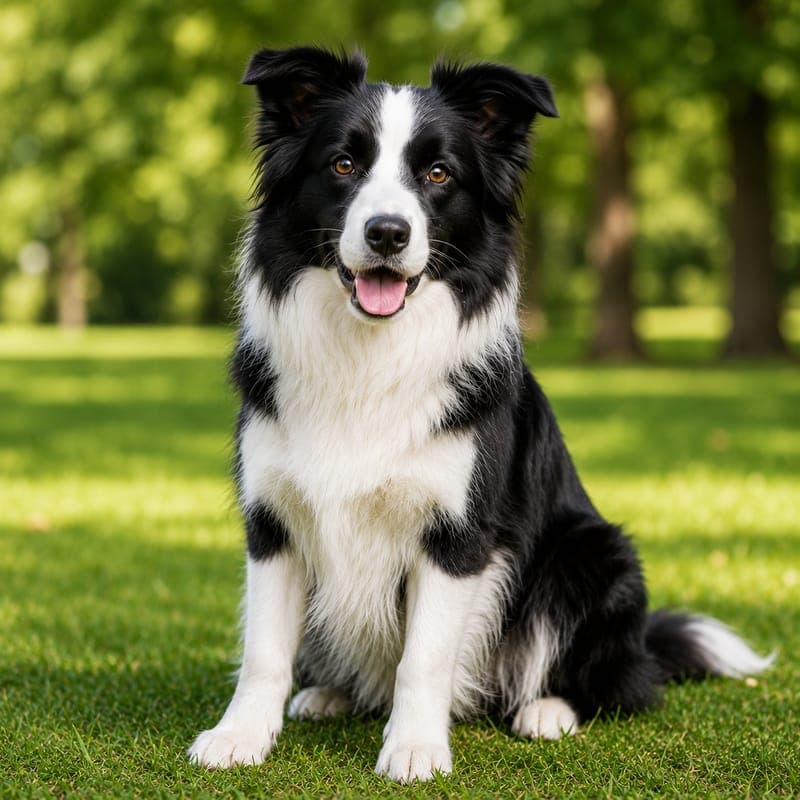 The Border Collie ranks as the most trainable breed on Coren's list — and also the most likely to invent its own "job" out of boredom.
8 basic commands every dog should learn
Regardless of breed, this is the recommended teaching order:
- Name recognition — the starting point for everything else; get a reliable response to their name first.
- Recall (come) — a safety command that prevents running off or getting lost.
- Sit — the most basic self-control command and the foundation for most others.
- Stay — a safety command for doorways and getting in/out of the car.
- Down — helps a dog settle and relax on cue.
- Drop — a safety command that prevents swallowing something dangerous or resource-guarding conflicts.
- Leave it — a safety command that stops them approaching or grabbing something off the ground.
- Heel — walking calmly beside you, cutting down on pulling and distraction.
Of these, recall and drop/leave it are the most important safety commands — they directly prevent a dog bolting or swallowing something dangerous. If training time is limited, prioritise these three above everything else.
The real breed differences show up in learning speed, willingness to cooperate, and which training method works best — not in whether a dog can be trained. With positive-reinforcement methods and short daily sessions, the vast majority of dogs can learn this full set of basics.
5 cat breeds compared
There's no Coren-equivalent for cats. Based on breed-personality research and clicker-training experience, ordered from most cooperative to needing the most patience:
- Maine Coon: intelligent, eager to interact, widely called the most "dog-like" cat breed — many can even learn fetch.
- Ragdoll: docile and people-dependent, highly cooperative; a simple clicker-trained behaviour usually lands in 1–2 sessions.
- Burmese: confident, energetic and social, a good candidate for advanced skills like leash walking.
- British Shorthair: independent and slow to warm up — not incapable, just needs about twice the patience of a highly cooperative breed.
- Domestic Shorthair: genetically mixed, huge individual variation; observe temperament for 1–2 weeks before planning a training approach.
 The Maine Coon is one of the few cat breeds that can learn advanced skills like fetch.
Cats vs dogs: different training logic
- Different motivation: dogs are wired to cooperate with a group and please their handler; cats are running a "is it worth it" calculation — almost all cat cooperation is for the immediate reward, not to please you.
- Different timelines: dog obedience training usually aims for reliable command-following, needing weeks to months of reinforcement; cat training goals are more practical (litter box, scratching post, carrier), and sessions run shorter (5–10 minutes vs. 10–15 for dogs).
- Different stakes on failure: failed dog training can become a safety issue (failed recall chasing traffic or wildlife); failed cat training is usually just a habit problem (scratched furniture, carrier refusal) — different risk levels mean different training priorities.
Choosing a pet by trainability
- First-time owner, limited time: lean toward high-ranking dog breeds (Golden Retriever, Labrador) or highly cooperative cat breeds (Ragdoll, Maine Coon) — less upfront training effort.
- Want a challenge, have the time: "too smart for their own good" breeds like the Border Collie or Poodle need constant mental stimulation — best suited to experienced owners whose lifestyle can deliver daily exercise and engagement.
- Apartment living, tight schedule: trainability is only one factor — weigh it against size, exercise needs and shedding using each breed's "Who they suit" and "Suitability rating" sections.
- Shelter adoption: regardless of breed ranking, the first step with any adopted cat or dog — especially adults or ex-strays — is always building trust, not rushing into commands.
For the full step-by-step routine on any specific breed, jump straight to its "Training time & skills" section.
FAQ
How many weeks old should a puppy be before starting training?›
Almost every breed can start basic training around 8 weeks old — learning its name, sit, and toilet training don't vary by breed. Keep "training" and "outdoor socialisation" separate, though: the full vaccination course usually isn't complete until around 16 weeks, so avoid dog parks and other spots where unknown dogs gather until then. Training at home and in your own yard can carry on as normal.
Is Coren's dog intelligence ranking reliable?›
Coren's ranking is based on a 1994 survey of 208 North American obedience-trial judges, measuring "working and obedience intelligence" — how fast a breed learns new commands. It doesn't measure overall intelligence, and individual dogs within a breed vary a lot; treat it as a rough guide, not gospel.
Is there an equivalent ranking for cats?›
No authoritative breed-intelligence ranking exists for cats. Cat trainability is more about personality traits — affection, curiosity, food/toy drive. Our cat comparison here draws on breed-personality research and hands-on clicker-training experience rather than a formal ranking.
Does a hard-to-train breed mean it's wrong for beginners?›
Not necessarily. Breeds like French Bulldogs and Dachshunds rank lower for trainability, but their size, temperament and exercise needs can still suit a first-time apartment owner. Training difficulty is one factor among several — pair this with each breed's "Who they suit" and "Suitability rating" sections.